
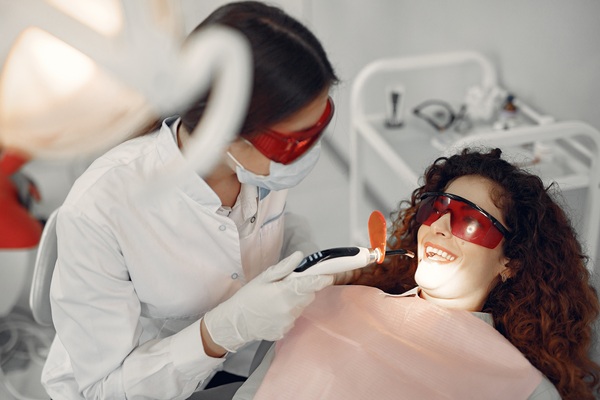
Teeth whitening for sensitive teeth is possible when the correct products, concentrations, and protective techniques are used. Patients with sensitivity require a more controlled approach to prevent discomfort while still achieving visible shade improvement. Professional assessment plays an important role in determining the safest and most effective whitening method.
Tooth sensitivity occurs when enamel is worn, gums recede, or dentin becomes exposed. Therefore, whitening treatments must be adjusted accordingly to protect the underlying tooth structure while delivering desired results.
Why Teeth Become Sensitive During Whitening
Tooth sensitivity develops when dentin—the layer beneath enamel—becomes exposed. Dentin contains microscopic tubules that connect to nerve endings inside the tooth.
Whitening agents, typically peroxide-based, temporarily increase fluid movement within these tubules. This response can trigger short-term sensitivity. Clinical evidence shows that higher peroxide concentrations are more likely to increase sensitivity, while lower concentrations reduce this risk.
For patients with sensitivity, whitening should be tailored to minimize irritation and protect enamel integrity.
Safe Teeth Whitening Options for Sensitive Teeth
Several clinically supported options are effective for teeth whitening, while maintaining comfort.
1. Professional In-Office Teeth Whitening with Protective Measures
In-office teeth whitening in Mississauga allows for careful monitoring and adjustment. Protective barriers are placed on the gums, and lower gel concentrations can be selected based on sensitivity levels.
Because treatment is supervised, our dental experts at Britannia Mississauga Dental can respond immediately if discomfort occurs.
2. Custom Take-Home Whitening Trays
Custom trays fabricated by a dental professional provide controlled whitening at a slower pace. These systems often use carbamide peroxide at lower concentrations, applied over several days or weeks.
The gradual process reduces the likelihood of sensitivity while still producing measurable shade improvement. Precise tray fit also limits gel contact with gums, reducing irritation.
3. Whitening Systems with Desensitizing Agents
Some professional whitening systems incorporate ingredients such as potassium nitrate or fluoride. These agents help calm nerve response and strengthen enamel during treatment.
For patients prone to discomfort, these formulations provide additional protection without compromising effectiveness.
4. Low-Peroxide and Alternative Whitening Formulas
Lower-peroxide whitening systems reduce the risk of irritation. While results may develop more gradually compared to high-concentration treatments, they are often preferred for patients prioritizing comfort.
A dental evaluation determines whether these systems are appropriate based on enamel thickness, gum condition, and existing restorations.
Maintaining Results Without Increasing Sensitivity
After whitening, enamel temporarily becomes more permeable. The following steps help maintain results and minimize discomfort:
- Use toothpaste formulated for sensitive teeth
- Brush with a soft-bristle toothbrush and fluoride toothpaste
- Avoid extremely hot or cold foods for 24–48 hours
- Rinse after consuming coffee, tea, red wine, or berries
- Schedule regular professional cleanings
Gradual touch-up treatments are often gentler than repeating full whitening procedures.
Why Professional Teeth Whitening Is Recommended for Sensitive Teeth
Over-the-counter whitening products may not account for underlying causes of sensitivity, such as enamel erosion, gum recession, or untreated decay. Without proper evaluation, the risk of irritation increases.
Professional teeth whitening ensures:
- Assessment of enamel and gum health
- Selection of an appropriate gel concentration
- Monitoring during treatment
- Compatibility with existing restorations (Note: fillings or crowns do not whiten)
At Britannia Mississauga Dental (Dr. Beena George Dentistry), whitening treatment begins with a clinical examination to determine the safest approach for patients with sensitivity. Treatment plans are individualized to balance effectiveness and comfort.
Who Should Avoid Teeth Whitening Until Evaluated?
Teeth Whitening should be postponed if a patient has:
- Active gum disease
- Untreated cavities
- Cracked enamel
- Severe gum recession
Addressing these concerns first improves both safety and results.
Safe and Effective Teeth Whitening for Sensitive Teeth
Teeth whitening for sensitive teeth starts with proper assessment. It requires a measured and clinically guided approach. When enamel condition, gum health, and whitening concentration are carefully evaluated, patients can achieve noticeable brightness without unnecessary discomfort.
To learn which whitening option is appropriate for you, contact Britannia Mississauga Dental (Dr. Beena George Dentistry) at 905-542-9999 to schedule your consultation.
Frequently Asked Questions
Yes. Teeth whitening for sensitive teeth can be performed safely under professional supervision. Lower concentrations, desensitizing agents, and customized trays help reduce discomfort.
Dentist-supervised whitening—either in-office with protective measures or custom take-home trays—is generally the safest option. Controlled application minimizes irritation.
Most patients experience mild, temporary sensitivity lasting 24 to 48 hours. Using desensitizing toothpaste and avoiding temperature extremes helps reduce discomfort.
Some lower-peroxide products may be tolerated, but they lack individualized assessment. Professional evaluation improves safety and predictability.
When performed under professional guidance and with appropriate concentrations, whitening does not damage healthy enamel. However, misuse or excessive frequency does increase risk.
Great article! You explained how teeth whitening can be done safely for people with sensitive teeth in a clear and reassuring way. Professional guidance is key to achieving brighter results while protecting enamel. Anyone looking for trusted dental services Orange NJ can benefit from understanding safe cosmetic dentistry options.
Yogi Dental – Dental Service Orange NJ
I’ve been playing here for a few weeks and the payouts are surprisingly fast. Definitely one of the best options for slots right now. Check out ph38jili
This site has a great variety of games and the community is awesome. I had a big win last night and it was credited instantly. Cheers to pkfafa855.
Top notch customer service and very fair odds. It feels like they actually care about the players here. I love using vnqu88 for my daily fun.
If you are looking for big wins and a fair game, this is the place to be. Give pk777xz a try!