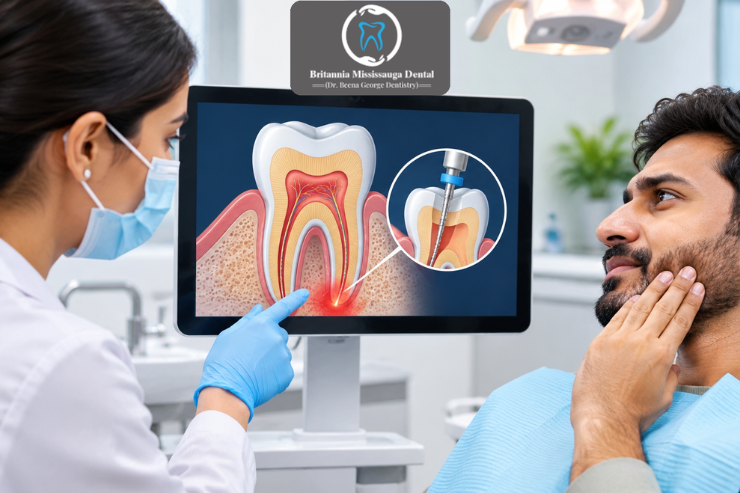
When your back tooth hurts when you bite, cold drinks sting, or a sore spot on your gum keeps coming back. Is it a deep cavity, a crack, or an infected molar?
If the tissue inside a molar is badly inflamed or infected, root canal treatment may help save it.
However, saving a molar takes more than treating its roots. The considerable factor is whether enough healthy tooth is left for a strong final repair.
What Happens When a Molar Becomes Infected?
The soft tissue inside a tooth, known as dental pulp, holds nerves and blood vessels. This tissue can become irritated or infected when bacteria reach it.
Common causes include:
- Deep tooth decay
- A cracked or fractured molar
- A damaged or worn dental filling
- Repeated restorative care on the same tooth
- An injury to the tooth
- Leakage around an older restoration
An infection does not always mean the tooth was poorly maintained. Teeth can change over time due to pressure, natural wear, or hidden cracks.
Root canal treatment removes the damaged or infected pulp. The dentist then cleans and seals the space inside the roots. A final filling or crown helps protect the tooth.
What Are the Signs an Infected Molar May Need an RCT?
Symptoms can vary. Some people experience strong discomfort, while others notice only mild changes.
Possible signs include:
- Pain that keeps coming back
- A sharp or dull ache when you chew
- Sheer Sensitivity from heat or cold
- Tender or swollen gums near the tooth
- Darkening of the tooth
- Swelling near the cheek or jaw
A dental abscess may sometimes develop near an infected tooth. However, these signs do not immediately prove you need a root canal treatment. Swelling or gum tenderness may also be due to other causes.
Can an Infected Molar Stop Hurting?
Yes. Pain may fade if the pulp is badly damaged and stops responding as it once did.
This does not mean the tooth has healed. An infection may still be present near the root, even if you feel better.
Do not rely on pain relief alone, to decide that a tooth no longer needs care.
Can an Infected Molar Be Saved?
Many molars can be treated, but not all can be saved.
A dentist usually check two things. First, can the root canals be treated? Second, is there enough sound tooth left to hold a dental filling or crown?
The answer may depend on:
- How deep the decay goes
- How much tooth is left above the gum
- Whether a crack runs into the root
- The health of the roots and nearby bone
- Whether a stable final repair is possible
At Britannia Mississauga Dental (Dr. Beena George Dentistry), root canal treatment is intended to preserve a tooth that can still function well. However, no treatment can guarantee that every infected molar will be suitable for restoration.
Why Is a Molar Root Canal Treatment Different From a Front-Tooth RCT?
Molars usually have a more complex internal structure than front teeth. They may have several roots and more than one canal inside a root. Some canals are narrow, curved, or hard to find.
Molars also carry greater chewing pressure. Henceforth, molar root canal treatment requires comparitively more careful assessment and restoration planning.
| Front tooth | Molar |
| Usually has a simpler internal shape | Often has several roots and canals |
| Mainly helps with biting | Handles grinding and chewing |
| Carries less chewing pressure | Carries heavier bite pressure |
| May need a filling afterward | Often needs added protection afterward |
| Easy access | Hard to reach area |
Our dentists plan both – the root canal and the final repair with those forces in mind.
This does not mean every molar takes longer to treat. It means the tooth needs a plan based on its own shape and condition.
What Happens During Molar Root Canal Treatment?
The steps may vary, but treatment often follows this path:
- Numb the area. The dentist uses a local anesthetic to reduce pain during care.
- Keep the tooth clean. A thin dental dam is placed around the tooth to keep out saliva.
- Clean the canals. The dentist makes a small opening, removes the pulp, and cleans and shapes the canals.
- Fill and seal. The canals are filled with a suitable material to seal the space.
- Restore the tooth. A filling closes the opening. A crown or other final repair may be needed to protect the molar.
Some cases take one visit. Others need more than one, based on your tooth condition and the care required.
Will You Need a Crown After a Molar Root Canal?
A crown is often recommended for a back tooth after root canal treatment. As molars bear heavy force when you chew, a dental crown can help:
- Protect the remaining tooth structure
- Restore a stable chewing surface
- Support normal bite function
- Reduce the risk of the tooth cracking
However, every tooth is different. The final restoration depends on the amount of healthy structure remaining. Your dentist will explain whether a filling or crown is more suitable.
What Is Recovery Like After a Molar RCT?
Your tooth and gums may feel sore for a few days. Mild pain when you bite can occur as the tissues settle.
Your dentist may advise you to:
- Wait until the numb feeling is gone before eating
- Start with soft foods if chewing feels sore
- Avoid hard chewing on the treated tooth until it has its final repair
- Brush and floss with care
- Follow the plan for pain relief and follow-up visits
Call your dental office if pain gets worse, swelling starts, your bite feels too high, or a temporary filling comes out.
When Is an Infected Molar an Emergency?
Do not wait for a routine visit if you have marked swelling of the face or jaw, a fever, or feel very unwell. Fast-growing swelling, and trouble opening your mouth also need urgent care.
If you have trouble breathing or swallowing, call 911 – seek emergency medical help right away.
Protecting Your Back Tooth Starts With the Right Diagnosis
A painful molar does not always need an RCT and an infected molar is not always beyond repair. The key is to find out what is wrong and whether the tooth can support a final filling or crown.
For an assessment of back tooth pain or possible root canal treatment in Mississauga, contact Britannia Mississauga Dental at 905-542-9999.
Frequently Asked Questions
Can an infected molar heal on its own?
A tooth with severe pulp damage or a root canal infection does not heal on its own. Pain may fade even when the problem remains. A dentist can advise on the right care.
Is a molar root canal painful?
Local anesthetic helps numb the tooth during care. You may feel some pressure, and mild soreness may follow. Tell your dentist if you feel pain so they can respond.
How many visits does a molar root canal take?
Some teeth can be treated in one visit. Others need more time due to curved canals, infection, or other needs. Your dentist can explain the plan after an exam.
Can I eat after a molar root canal?
Yes, once the numb feeling fades. Soft foods may be easier at first. Avoid hard chewing on the tooth until your dentist says it is ready.
What if my molar cannot be saved?
If the tooth has a deep split or too little tooth left for a safe repair, removal may be needed. Call us at 905-542-9999 to book an appointment and discuss the available options.