
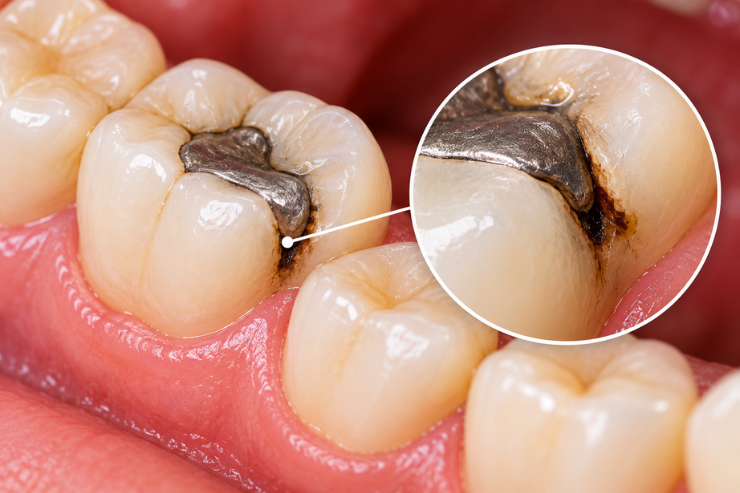
You notice a dark line beside an old filling or a tooth that never bothered you, suddenly feels sensitive to cold. You begin to wonder if the filling is wearing out, or if a cavity is forming underneath!
The answer is not always straightforward and there are many possibilities. A dark line may just be a stain. Sensitivity may come from exposed tooth roots or a small crack. However, these changes can also point to decay around an existing filling.
A filling can look normal and feel comfortable, but still have decay developing around it.
Knowing what to watch for can help you decide when to visit your dentist in Mississauga. It can also help you avoid replacing a filling that may still be in good condition.
What Is a Cavity Around a Filling?
A cavity around a filling is new decay that affects the natural tooth beside or beneath an existing tooth restoration. Dentists call this recurrent decay or secondary decay.
The filling material itself does not develop a cavity. Instead, decay often starts where plaque builds up on the tooth. Plaque is a sticky film of bacteria. These bacteria produce acids when exposed to sugars. Over time, the acids can damage the tooth.
In the early stages, you may not feel pain or see any change. This is one reason dental checkups matter, even when your fillings seem fine.
6 Signs Your Old Filling May Need Attention
Not every change means you have a cavity. Still, some signs are worth checking.
1. New Sensitivity Around the Filling
Sensitivity to cold, heat, or sweet foods can occur for several reasons: gum recession, enamel wear, a crack, or other tooth changes.
Pay attention to sensitivity that:
- Starts without a clear reason
- Happens more often
- Becomes stronger over time
- Lingers after you finish eating or drinking
A dentist can check whether the filling or the tooth needs treatment.
2. Pain When Biting or Chewing
A restored tooth should feel comfortable during normal chewing.
If you feel a sharp pain when biting down, the problem may involve the filling, the tooth, or your bite.
Possible causes include:
- A cracked tooth
- A worn filling
- Decay near the restoration
- A change in how your teeth meet
Avoid chewing hard foods on the affected side until the tooth is checked.
Assuming that a new filling will solve the problem without a dental exam is not ideal.
3. A Dark Line or Color Change Around the Filling
A dark line beside a filling can be worrying, especially if it was not there before.
However, a dark line does not always mean there is decay under the filling.
Some fillings develop stains along their edges. This can happen over time, even when the surrounding tooth is healthy.
In other cases, a dark area may be linked to tooth wear, a gap, or decay.
You cannot reliably tell the difference by looking in a mirror. A dentist must examine the area before deciding if treatment is needed.
4. A Rough, Sharp, or Chipped Filling Edge
Does your tongue catch on the edge of an old filling?
A filling may feel rough if its surface wears down or its edge becomes uneven.
A rough edge may only require polishing. However, it should be checked because uneven margins can trap plaque or food.
5. Food Keeps Getting Stuck Near the Same Tooth
Food getting trapped in the same spot after meals can be more than a minor annoyance.
It may happen when:
- The shape of a filling changes
- The contact between two teeth becomes loose
- A filling edge breaks or wears down
- Gum changes create a space where food collects
Food trapping does not prove that a cavity is present. However, it can make the area harder to clean and may increase plaque buildup.
If you keep reaching for floss after every meal because food catches near one filling, mention it at your next dental visit.
6. A Filling Feels Loose or Moves
A loose filling needs prompt attention.
You may feel movement when chewing or notice that the tooth feels different. In some cases, part of the filling may break away.
A loose or broken filling can leave part of the tooth exposed. This may lead to sensitivity and make cleaning more difficult.
Avoid testing the filling with your tongue or fingers. Contact your dentist to arrange an assessment.
If a filling falls out, keep the area clean and avoid chewing hard foods on that tooth until you receive professional advice.
Can Decay Around a Filling Happen Without Pain?
Yes. Decay around or beneath an existing/old filling can develop without noticeable pain.
The damage may remain limited to the outer tooth structure at first. The affected area is usually difficult to see at home because it lies near or under the restoration.
A worn or damaged filling edge may make plaque harder to remove. Consider routine dental checkups for better oral health in the long run.
How Does a Dentist Check for Decay Under a Filling?
Your dentist may begin by asking when your symptoms started and what makes them better or worse.
The examination may include:
- Checking the edges of the filling
- Looking for cracks, stains, or worn areas
- Examining the surrounding tooth and gums
- Checking how your teeth meet when you bite
- Assessing areas where food gets trapped
- Reviewing earlier dental records or images
Dental X-rays may also be recommended.
An X-ray can reveal some areas of decay that are hard to see during a visual exam. However, X-rays do not detect every cavity. Some early changes may be too small to appear clearly.
That is why dentists consider the full picture rather than relying on one symptom or image.
Does an Old Filling Always Need to Be Replaced?
Does Every Old Filling Need to Be Replaced?
No. A filling does not need to be replaced simply because it is old.
Some fillings remain in good condition for many years. Others may need attention sooner because of wear, damage, or new decay.
| A Filling May Be Stable If | A Filling May Need Attention If |
| It fits securely against the tooth | It feels loose or uneven |
| Chewing feels comfortable | Biting causes discomfort |
| There are no signs of new decay | Decay appears near the edge |
| The surface remains intact | The filling is chipped or cracked |
| The tooth is easy to clean | Food repeatedly gets trapped |
A stable filling can continue to protect the tooth. However, if there are changes, your dentist may recommend polishing, repair, replacement, or further treatment depending on the findings.
How to Protect Teeth With Existing Fillings
Daily care helps protect both natural teeth and existing restorations.
Helpful habits include:
- Brushing twice daily with fluoride toothpaste
- Cleaning between teeth every day
- Limiting frequent sugary snacks and drinks
- Avoiding chewing ice or very hard objects
- Keeping routine dental checkups
- Reporting changes in sensitivity, bite comfort, or filling texture
Consistent care helps reduce plaque buildup near dental fillings and supports the long-term health of restored teeth.
When Should You Schedule a Dental Checkup in Mississauga?
You may consider scheduling a dental checkup in Mississauga if:
- Sensitivity near a filling continues
- A filling feels rough, uneven, or loose
- Chewing feels different on one side
- Food keeps collecting near the same tooth
- You notice a crack in the filling
- The tooth or filling changes in appearance
- A previously comfortable tooth starts to feel sensitive
A dental exam can confirm whether the filling remains stable or needs repair.
Keep Your Existing Fillings in Good Condition
An old filling that feels sensitive, rough, or loose does not always need replacement. The first step is finding out what has changed.
At Britannia Mississauga Dental (Dr. Beena George Dentistry), patients can receive preventive and restorative dental care focused on maintaining healthy teeth and long-term oral function.
If you are worried about a cavity around an existing filling, a dental assessment can help determine whether the tooth needs monitoring, repair, replacement, or any other treatment.
Concerned About an Old Filling? Book a Dental Assessment with us at 905-542-9999.
Frequently Asked Questions
Can a cavity grow underneath a dental filling?
Yes. New decay can affect the natural tooth around the edge of a filling and may extend beneath it if the seal is compromised.
Does sensitivity around an old filling always mean decay?
No. Sensitivity can have several causes, such as gum recession, exposed dentin, a crack, or changes in the filling. A dental examination can help identify the cause.
Does a dark line around a filling mean I have a cavity?
Not always. Dark lines may be stains rather than decay. A dentist can check whether the filling edge is sound or if the surrounding tooth has been affected.
How long do dental fillings last?
Fillings can last for many years, but there is no fixed lifespan for every restoration. Their condition depends on the material, tooth location, chewing forces, oral care, and other factors.
Can decay under a filling happen without tooth pain?
Yes. Early decay may cause no discomfort. Even when a tooth feels normal, a dentist may find changes during an examination or on an appropriate dental X-ray.