
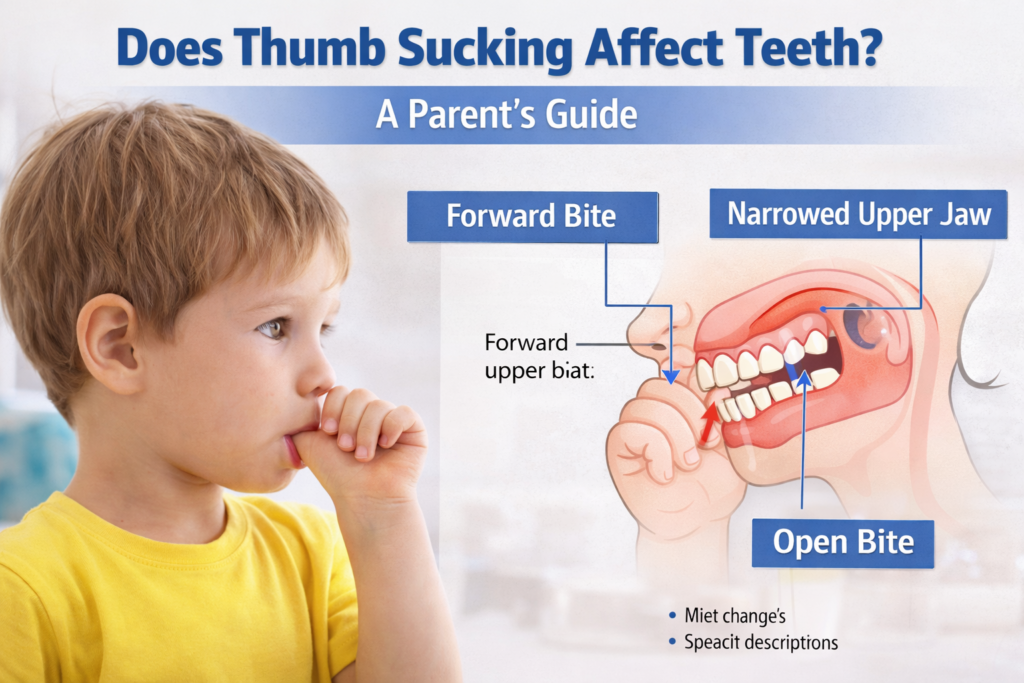
Thumb sucking and pacifier use are common comfort habits in early childhood. These behaviours help children relax, fall asleep, and feel secure. In most cases, children outgrow them naturally. However, when these habits continue beyond the early years, they can influence how the teeth and jaws develop.
Many parents have questions about how thumb sucking may affect their child’s teeth and whether it can impact long-term oral health. Understanding when to guide your child away from these habits—and how to do so in a supportive way—can help promote healthy dental development.
Why Children Suck Their Thumb or Use a Pacifier
Thumb sucking and the use of pacifiers serve as natural self-soothing mechanisms for infants and toddlers. These habits support emotional comfort, especially during sleep or in unfamiliar situations.
In most cases, it is considered normal and harmless, and is not typically associated with dental concerns.
How Thumb Sucking Affects Teeth
Thumb sucking may affect dental development if it continues beyond the age of three to four years, or occurs with strong, frequent pressure. Over time, this pressure can affect teeth positions and the jaw’s shape.
Possible effects include:
- A forward upper bite (teeth pushed outward).
- A narrow upper jaw, which may affect spacing or breathing patterns.
- An open bite, where the upper and lower teeth do not meet when the mouth closes.
- Mild changes in speech due to tongue positioning.
These changes may improve gradually once the habit stops, particularly in younger children.
How Pacifiers Affect Your Child’s Teeth
Pacifiers are often easier to wean compared to thumb sucking, but they can affect teeth in similar ways if used for too long.
Prolonged pacifier use may contribute to:
- Forward movement of front teeth.
- Changes in bite alignment.
- Increased spacing or crowding of teeth.
Dentists recommend limiting pacifier use after age 2, and discontinuing it by age 3 to support healthy oral development.
Regular visits to a trusted dental clinic in Mississauga can help monitor your child’s tooth growth and identify any early changes.
How to Help Your Child Stop Thumb Sucking or Pacifier Use
Supportive strategies are often the most effective. You may consider:
- Offering comfort alternatives, like a favourite toy or blanket.
- Praise your child for shorter periods without the habit.
- Create a simple reward chart for encouragement.
- Identify triggers such as stress, boredom, or fatigue, and address the cause.
- For pacifiers, try gradual reduction rather than stopping suddenly.
A positive, patient approach helps children adapt more comfortably.
How Dentists Support Healthy Oral Habits in Children
A dentist can monitor your child’s bite, jaw growth, and overall oral health. If needed, they may recommend:
- A gentle behavioural plan for habit change.
- A reminder appliance (only in older children) if the habit persists.
- Regular tracking to ensure teeth shift into healthy positions as the habit fades.
Early guidance helps avoid more complex treatment later.
Focus on Healthy Habits for Healthy Smiles
Most children naturally stop thumb sucking or pacifier use, and early dental changes often improve once the habit ends. With timely guidance and regular dental care, children can develop healthy, well-aligned teeth.
If you would like to understand how your child’s oral habits may be affecting their dental development, consider a routine dental check up with our experts at Britannia Mississauga Dental (Dr. Beena George Dentistry) for supportive, child-focused dental care.
FAQ’s :
1. When should I worry about my child’s thumb sucking habit?
Thumb sucking becomes a concern if it continues beyond the age of 3 or happens often during the day. Prolonged habits may gently affect bite alignment and should be discussed with a dentist.
2. Can pacifiers really affect permanent teeth?
Yes. Long-term pacifier use can influence how the teeth and jaws develop. If the habit continues past age three, it may impact spacing, bite alignment, and overall dental growth.
3. How can I gently help my child stop thumb sucking?
Use positive reinforcement, offer comfort alternatives, and identify when your child most seeks the habit. Gentle reminders and consistent encouragement work better than pressure or sudden restriction.
4. Do thumb sucking and pacifiers affect speech development?
In some cases, prolonged habits may influence tongue positioning and mild speech patterns. Once the habit stops, many early speech concerns improve naturally with normal oral development.
5. Will my child’s bite correct itself after stopping the habit?
Often, yes. If the habit ends early, teeth and jaws can naturally shift back into healthier positions. Your dentist can monitor progress and guide you on the next steps if needed.

Installation was a breeze and the performance is stable. It is much better than playing in a mobile browser. Check out smjiliappapk for the best mobile gaming.
Top notch gaming experience with a very modern look. Everything is well organized and the navigation is intuitive. I am very satisfied with idpuasbet.
Great variety of slots and the loyalty program is actually worth it. I’ve tried many others, but the stability here is unmatched. Big thanks to phssg777 for the great service.
I really appreciate how easy it is to navigate this site. Even for beginners it is very straightforward. Give pkluky97 a try!
I was skeptical at first but this place is legit. Smooth transactions and a great variety of options to choose from. pk1777xs
I’ve been playing here for a week now and the payouts are actually legit. Really smooth interface and the games load fast. Definitely check out kkjilivip if you want a reliable spot.